For my formal film studies I choose to do a mix between the sports-comedy genre. I choose The Longest Yard, directed by Peter Segal, Dodge Ball, Directed by Rawson Thurber, and Happy Gilmore directed by Dennis Dugan.

The Longest Yard starts off with our protagonist, who once
was an all-star quarterback with a bad history, is sent to prison after
stealing his girlfriend’s car. The warden wants Paul Crewe, played by Adam
Sandler, to help his football team by giving a couple tips to get an edge on the
competition. Paul Crewe is not up for any of it and is only looking to serve
his time. He soon agrees to help after the guards continuously push him around,
and gives the warden the idea to do a practice game on the convicts. Paul Crew,
still not willing to, goes through with the warden’s idea and assembles a team
to play. It was once thought to be a game with no possible chance of winning,
now aimed toward that exact goal. The only problem is organizing a team of
crooked convicts who are focused on the game and not on the guards. Paul Crewe
is helped by his advisors played by Chris Rock and Burt Reynolds, who played in
the original film as Paul Crewe. There are lots of funny scenes throughout the
movie and those who enjoy seeing big hits in football are sure to enjoy it.
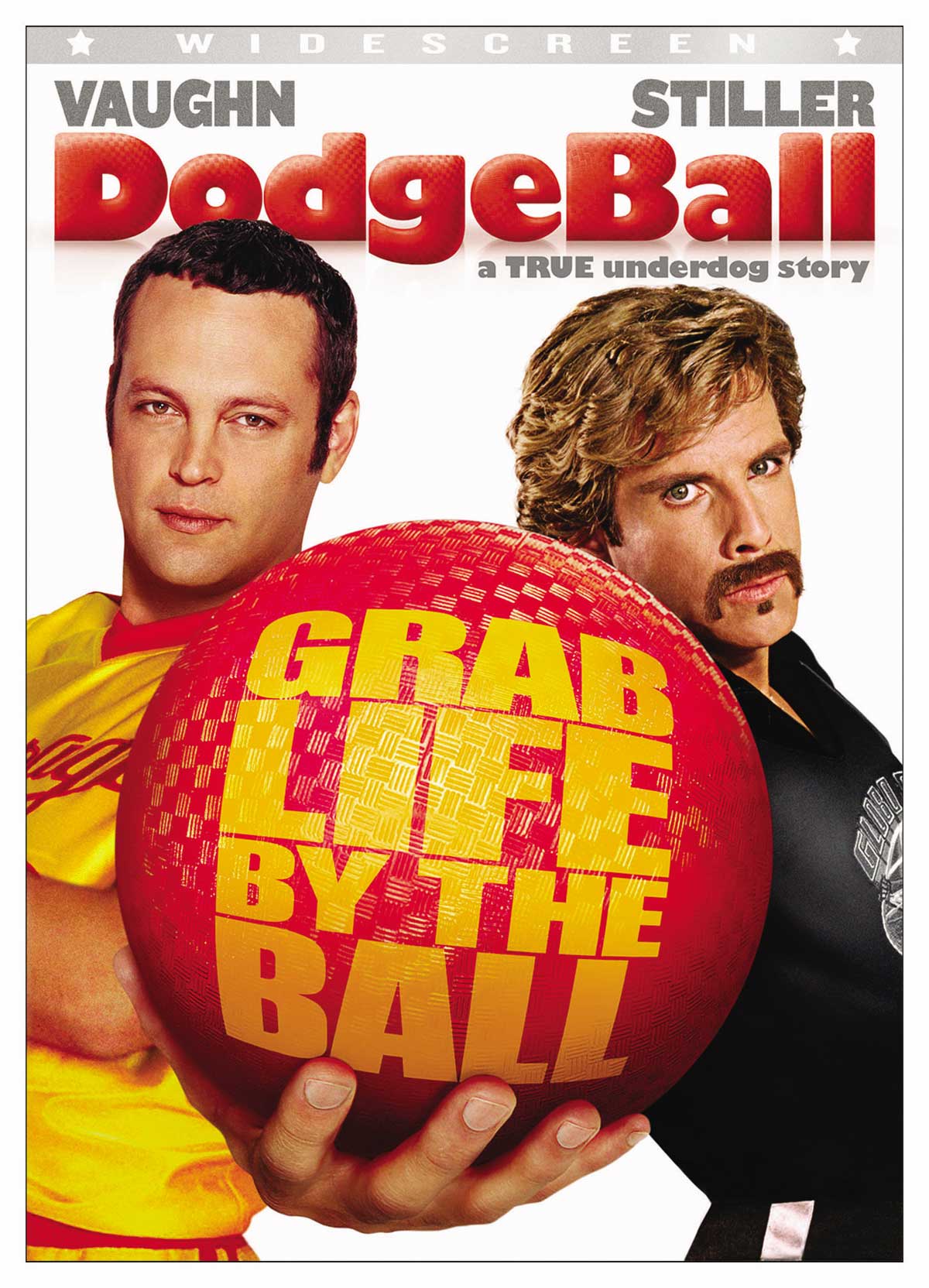
Dodge Ball, a True
Underdog Story, is exactly like the title says. Vince Vaughn plays as Peter
La Fleur, a lazy slob who owns the local gym. Behind on his payments, he faces
financial problems and is going to lose his gym to White Goodman, played by Ben
Stiller. Him and his co-workers try to figure out how to raise the money until
one of his co-workers mentions the dodge ball championship. Knowing nothing
about how to actually play dodge ball, they enter the tournament and barely
make it to the playoffs. The team consists of a bunch of characters such as a
guy who thinks he’s a pirate, a guy who is looking for love through voicemail
services, and a guy trying to redeem himself on the cheer team. His rival,
White Goodman, joins the league to make sure they don’t win back their gym. The
team is put up against teams with years of experience, but they are coached by Patches
O'Houlihan, a once popular dodge ball player now handicap.

Happy Gilmore, played by Adam Sandler, is a man who grew up
loving hockey but was never good enough to make the team. When his grandma owes
the government thousands of dollars, he looks towards finding ways to earn
money so the government can return her things and her home. When the movers
fool around with some his grandfather’s clubs, he orders them to stop and go
back to work. When the workers ignore him, and continue playing golf, Happy
makes jokes as they hit the balls. When the workers give him the club he shows
his true talent and recognizes a chance to earn some money. When he uses his
talent as a freak show, a coach recognizes his talent and signs him to the PGA
tour. They only problem is that not only does he need to work on his golf
skills, but his anger management.
What seems to take place in all three of these sports
comedies is that there is a formula that each of these directors use in their
films. They first start off with the protagonist who has nothing really going
in life, which in this case all three of the characters have. Next they are
setup with a situation they have to deal with but they are not alone. They all
have a group of people behind them and more importantly one mentor who sees
them through the very start of the movie. When things seem to be going good for
the protagonist, something comes up where the protagonist feels defeated and
sees no hope for his cause. In this case, the mentor ends up dying and the
situation they face seems almost impossible. When he realizes that his friends
are more important, he chooses to not give up and stick with them. Normally
there’s a rival or group of rivals that the protagonist faces and, in the end,
the good guys win. This is a true underdog story. All that is needed is a cast
of funny and familiar actors, to fill the parts to create a sports comedy.

Hollywood loves to add a lot of cameos such as Bob Barker in
Happy Gilmore, Chuck Norris in Dodge Ball, and Rob Schneider in The Longest
Yard. They donate little to the overall movie but add a lot to the audience.
Their face adds more to the movie than just some random actor. For example, the
main character, in the movie Dodge Ball, sits at the bar watching his team
about to forfeit. When all of a sudden, Lance Armstrong comes up to him and
gives him moral support which encourages him to join his team. This not only adds to the comedy aspect of
the movie but also adds to the experience of a popular figure people are
familiar with. Hollywood also fills the cast with pop culture icons such as
Nellie, a hip hop star, who is in the Longest Yard. Nellie helps appeal to
those who enjoy his music and more importantly the African-American audience. Burt
Reynolds on the other hand, appeals to those who have seen the original movie
or enjoyed his other work. While Hollywood puts in these big named icons, they
cannot do it without product placement. In each of the films they focus on one
particular company they advertise. The three companies that they showed were
Subway, McDonalds, and ESPN, which was shown numerous times. The last thing
these films had were long drawn out scenes, where the characters were moving in
slow-motion, which added to the drama,
or comedy aspect of the movie.
Other small similarities
A lot of the comedy routines done in the films showed large
men put next to a much tinier man where it is seen as funny based on how they interact
with each other in certain situations. A lot of women are portrayed to be a
kind of sexual figure or eye candy for the audience. In the three movies, all
dealing with sports, show a lot of people getting hurt which is what audiences
want to see as comedy.


One of the differences in all the movies were the type of
comedy used based on what was popular at the time. While all the movies had a
similar style of how jokes were delivered, the references and people mentioned
in that year differed. Some still can be considered to still be funny but some
no longer credible, such as Lance Armstrong giving moral advice. The music is
also used differently in each of the films based on tone. In a football movie
you expect to hear music to pump up players and audience. When there’s a movie
about golf you expect something a little different. There is not alot of differences between these three movies and share the same formula in the sports comedy genre.

Nice job here, Shawn. I like how you basically pinpointed the formula for a sports comedy. You're exactly right--and there are a lot more movies/genres that probably fit this mold as well. Hollywood likes certain formula, and this is definitely one that seems to work, not offend, and bring in the $ each time. Personally, I'm kinda bored with it. I wish you would have offered your opinion/perspective on the implications of this formula, other films that do this or stray from it, etc. But, nice work with catching these things.
ReplyDelete